
Plywood vs MDF Cabinets: Which is Better for Commercial Use?
If you are planning a commercial cabinet project, one of the first decisions you will face is material. And for most businesses in Saskatchewan, that decision comes down to two options: plywood or MDF.
Both materials are used in commercial cabinets every day. Both have clear strengths. But they are not the same, and picking the wrong one can cost you money, time, or both.
This guide breaks down the real differences between plywood and MDF so you can make a confident choice for your project. No filler, no fluff. Just the facts from 30 years of building commercial cabinets in Saskatoon.
Need help choosing the right material? Get a free consultation or call us at (306) 975-2020.
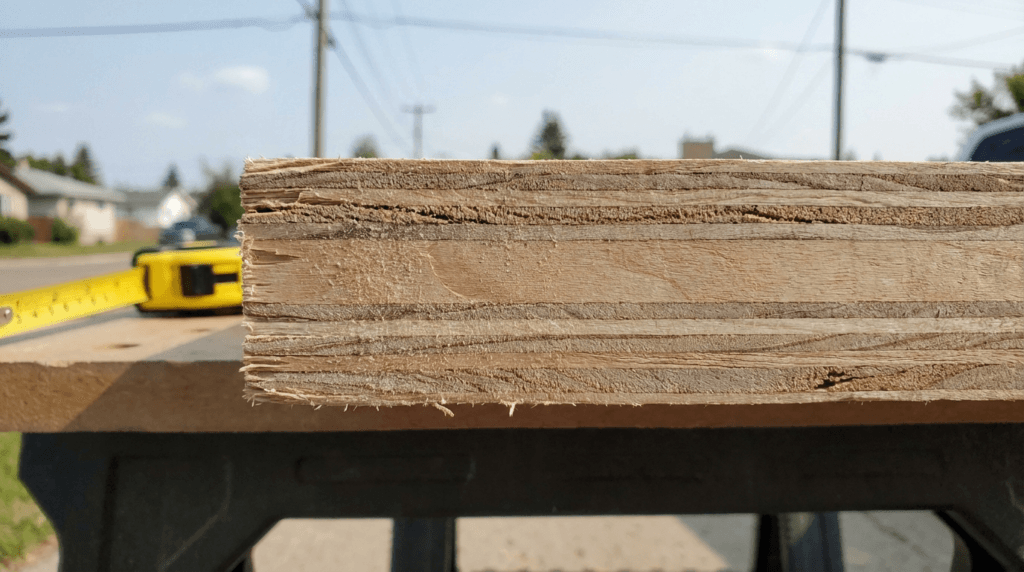
What is plywood?
Plywood is made from thin layers of real wood, called veneers. These layers are stacked and glued together with the grain of each layer running in alternating directions. That cross-grain construction is what gives plywood its strength.
For commercial cabinets, you will usually see cabinet-grade plywood. This is a higher quality product than the plywood you find at hardware stores for general construction. Cabinet-grade plywood has smoother faces, fewer voids between layers, and tighter manufacturing standards.
Common thicknesses for cabinet boxes are 1/2 inch and 3/4 inch. Most commercial applications use 3/4 inch plywood for cabinet boxes and 1/2 inch for backs and shelving.
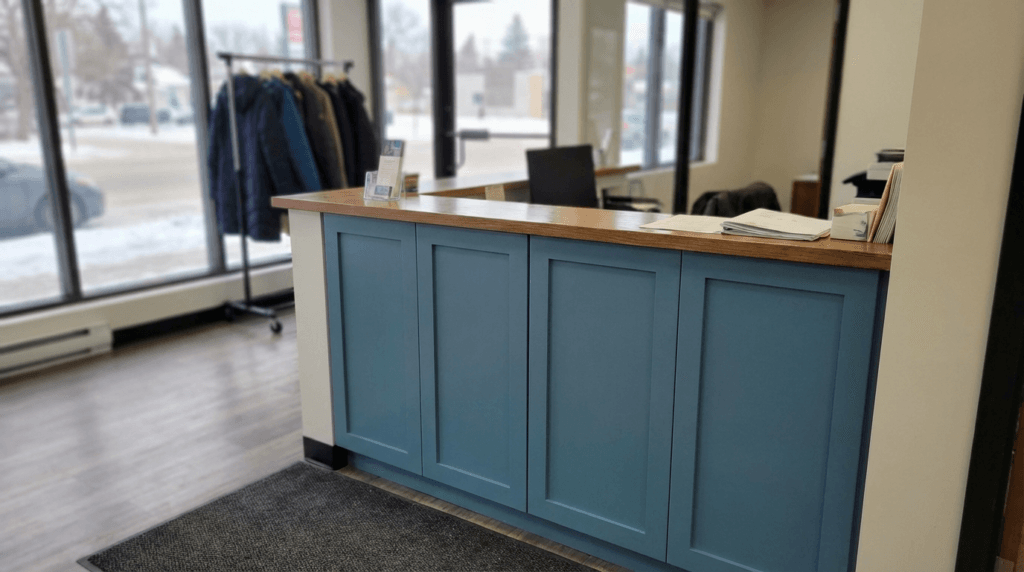
What is MDF?
MDF stands for medium-density fibreboard. It is made from wood fibres that are broken down, mixed with resin, and pressed together under high heat and pressure. The result is a smooth, dense, uniform panel with no grain pattern.
Because MDF has no grain, it machines cleanly in every direction. This makes it a popular choice for painted cabinet doors, decorative panels, and detailed profiles cut on a CNC router.
MDF is available in several grades. Commercial-grade MDF is denser and more durable than standard builder-grade panels. It also comes in moisture-resistant versions, which we will cover later.
Durability and strength
This is where plywood has a clear advantage.
Plywood is stronger pound for pound than MDF. Its cross-grain layers give it better resistance to bending, warping, and impacts. If someone drops a heavy box into a plywood cabinet, the shelf will likely survive. MDF in the same situation is more prone to denting or cracking at the edges.
Plywood also holds screws better. The wood fibres give fasteners something to grip. MDF can split or crumble around screws, especially near edges, unless you pre-drill or use specialized fasteners.
For high-traffic commercial spaces like restaurants, retail stores, and schools, this difference matters. Cabinets in these environments take a beating. Plywood handles that abuse better over the long run.
That said, MDF is not fragile. In lower-traffic settings like corporate offices or administrative areas, MDF cabinets hold up well for years with normal use.
Moisture resistance
Neither plywood nor standard MDF is waterproof. But their reactions to moisture are very different.
Plywood tolerates moisture better than MDF. When plywood gets wet, it can dry out and return close to its original shape. It may swell slightly, but it recovers.
Standard MDF absorbs water like a sponge. Once it swells, it does not go back to its original shape. The fibres separate, the surface bubbles, and the panel loses its structural integrity. This is the single biggest weakness of MDF.
Moisture-resistant MDF (sometimes called MR MDF or green-core MDF) performs better than standard MDF in damp environments. It will not match plywood’s moisture tolerance, but it is a reasonable middle ground for spaces with occasional humidity.
For healthcare facilities with regular cleaning and sanitizing, or restaurant kitchens with steam and spills, plywood is the safer choice. For dry office environments, standard MDF works fine.
Surface quality and finishing
Here is where MDF pulls ahead.
MDF has a perfectly smooth, flat surface with no grain, knots, or voids. When you paint MDF, the finish is flawless. The surface absorbs paint evenly, and there is no grain pattern showing through. For cabinet doors with a painted finish, MDF produces a cleaner result than plywood.
MDF also machines beautifully. Our CNC equipment can cut detailed profiles, decorative edges, and custom shapes into MDF panels with sharp, clean lines. Plywood is harder to profile because the alternating grain layers can chip or tear at the edges.
Plywood has a natural wood grain that shows through clear finishes. If you want a natural wood look, plywood delivers. But if you are painting, those grain patterns can telegraph through the paint and create a less uniform finish.
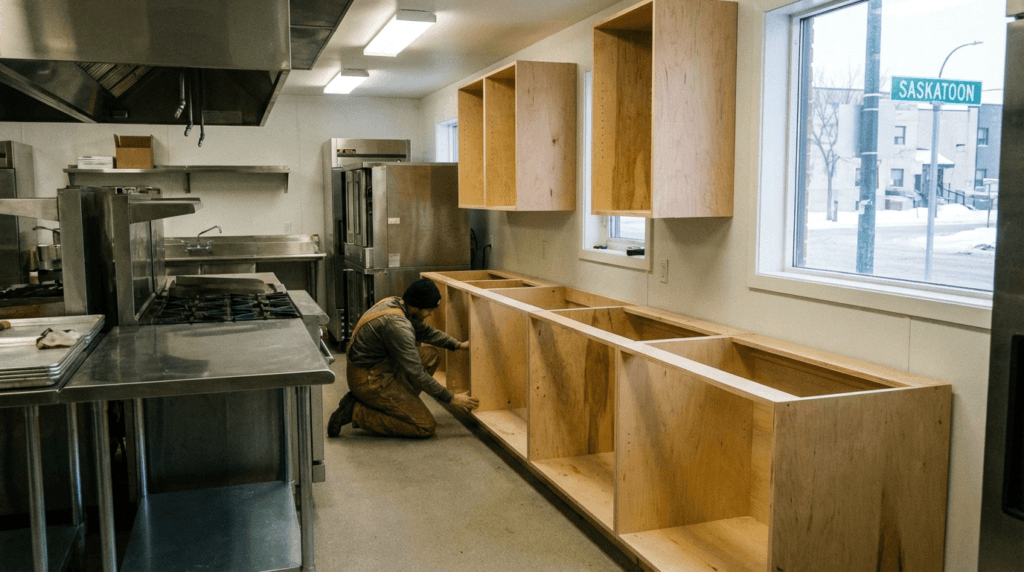
For cabinet finishes where appearance is the top priority, like reception areas or custom reception desks, MDF doors paired with plywood boxes is a popular combination. You get the smooth painted finish on the visible surfaces and the strength of plywood where it counts.
Weight
MDF is heavy. A 3/4 inch sheet of MDF weighs roughly 96 pounds. A 3/4 inch sheet of cabinet-grade plywood weighs about 60 to 70 pounds.
This matters for a few reasons. Heavier cabinets need stronger wall mounting hardware. They are harder to transport and install. And in upper cabinet applications, that extra weight puts more stress on the wall anchors over time.
For large commercial cabinet installations, the weight difference adds up. A full kitchen or office worth of MDF cabinets will be noticeably heavier than the same layout in plywood.
Cost
MDF is less expensive than cabinet-grade plywood. On average, MDF costs 20 to 40 percent less per sheet. For large commercial projects, that price difference is significant.
But raw material cost is only part of the picture. You also need to consider how each material affects labour, hardware, and lifespan.
MDF cabinets may need heavier-duty mounting hardware because of the weight. They may also need replacement sooner in high-moisture or high-traffic areas. Plywood costs more upfront but can last longer in demanding environments.
The real question is not “which costs less?” It is “which gives me better value over the life of the project?”
For budget-conscious projects in dry, low-traffic spaces, MDF is a smart choice. For spaces that need to last 15 to 20 years with heavy daily use, plywood usually delivers better long-term value.
If you want help working through the numbers for your specific project, our team can put together a detailed quote with material recommendations.
When to use plywood
Plywood is the better choice when your project needs:
- Cabinets in wet or humid environments (kitchens, bathrooms, healthcare)
- High-traffic spaces where cabinets take daily wear and impact
- Upper cabinets where lighter weight reduces stress on wall anchors
- Cabinet boxes and structural components that need screw-holding strength
- Projects where long-term durability outweighs upfront cost savings
When to use MDF
MDF is the better choice when your project needs:
- Smooth, flawless painted surfaces on cabinet doors and panels
- Detailed CNC-cut profiles, decorative edges, or custom shapes
- Budget-friendly material for large-volume projects
- Cabinets in dry, climate-controlled environments
- Uniform thickness and density across every panel
The combination approach
Here is what we recommend for most commercial projects: use both.
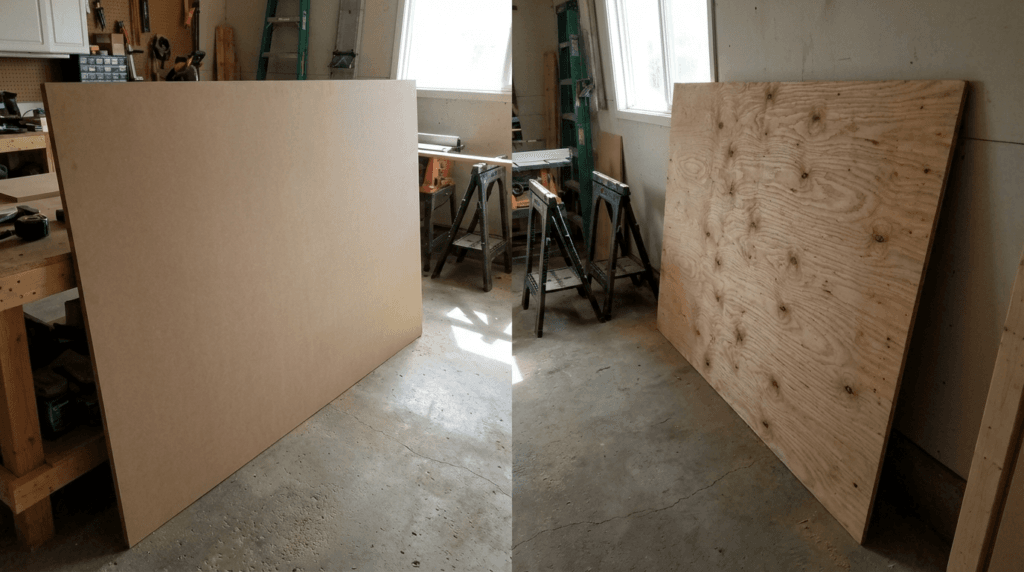
Plywood for the cabinet boxes, shelves, and structural parts. MDF for the doors and decorative panels that get painted.
This combination gives you the strength and moisture resistance of plywood where it matters most, plus the smooth painted finish of MDF on the surfaces people actually see. It is the approach we use on the majority of our commercial millwork projects, and it balances performance with budget.
Every project is different, though. The right material depends on your industry, your space, your budget, and how long you need the cabinets to last. That is why we start every project with a free consultation to understand what you actually need.
Frequently asked questions
Is plywood stronger than MDF?
Yes. Plywood has better tensile and bending strength because of its cross-grain layer construction. It resists impacts, holds screws better, and is less likely to crack at the edges than MDF.
Can MDF cabinets get wet?
Standard MDF absorbs moisture quickly and can swell, bubble, or lose its shape. Moisture-resistant MDF performs better, but it still cannot match plywood in wet environments. For kitchens, bathrooms, or any space with regular water exposure, plywood is the safer material.
Why is MDF better for painting?
MDF has a perfectly smooth, grainless surface. Paint absorbs evenly across the panel, so you get a consistent, uniform finish. Plywood has a natural wood grain that can show through paint, creating an uneven look.
Is plywood worth the extra cost?
It depends on the application. For high-traffic, high-moisture, or long-lifespan projects, plywood’s durability usually delivers better value over time. For dry, low-traffic environments on a tighter budget, MDF can be the smarter investment.
Can you mix plywood and MDF in the same cabinet?
Yes, and we often do. Plywood cabinet boxes with MDF doors is a common approach in commercial millwork. It combines the strength of plywood with the smooth painted finish of MDF.
Which material is more eco-friendly?
Both can be sourced responsibly. MDF uses wood fibres from sawmill waste and smaller trees, so it makes efficient use of wood resources. Plywood uses whole veneers from larger logs. Both are available with FSC certification and low-VOC adhesives.
Ready to choose the right material for your commercial cabinets? Contact Broadway Millwork for a free consultation, or call us at (306) 975-2020. We have been building commercial cabinets across Saskatchewan for over 30 years, and we are happy to help you find the best fit for your project.
Request a Quote
Service Areas
We serve businesses across Saskatchewan, from Saskatoon and Regina to smaller regional centres throughout the province. Here are some of the communities where we regularly complete commercial millwork projects:
- Saskatoon
- Regina
- Prince Albert
- Moose Jaw
- Swift Current
- Yorkton
- North Battleford
- Lloydminster
- Estevan
- Weyburn
- Martensville
- Warman
- Humboldt
- Meadow Lake
Don’t see your community on the list? We take on projects across Saskatchewan and into neighbouring provinces, including Alberta and Manitoba. Contact us to discuss your project location and we’ll let you know how we can help.