
Commercial Grade Cabinet Materials: Your Complete Guide
Broadway Millwork has been building commercial cabinets in Saskatoon for over 30 years. In that time, we have worked with just about every material on the market. Some hold up. Some do not.
The material inside your cabinets matters more than most people think. It affects how long they last, how they handle moisture, how much weight they can carry, and what your project ends up costing. Choosing the wrong material for your space can mean replacing cabinets years before you should have to.
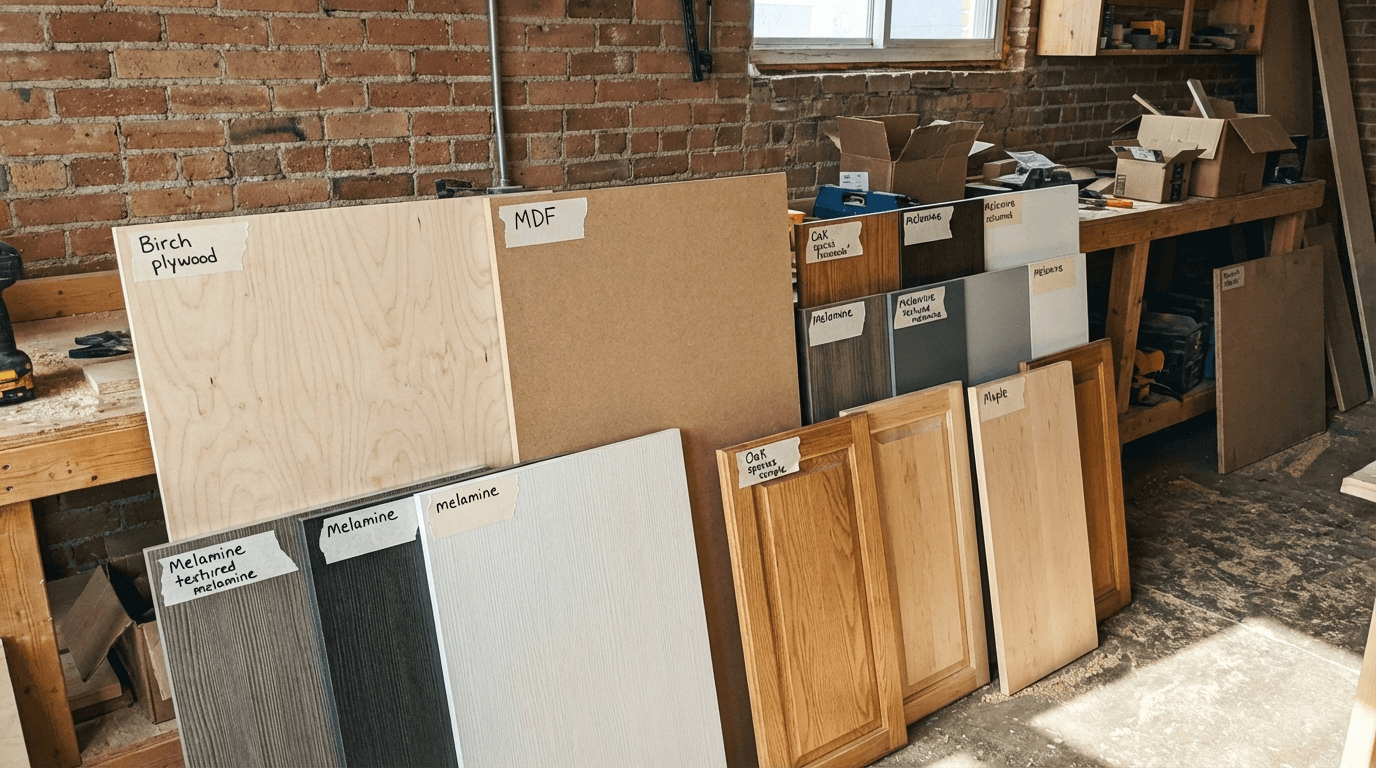
This guide breaks down the four most common commercial cabinet materials we use: plywood, MDF, melamine, and solid wood. We will cover where each one works best, where it falls short, and how to decide which is right for your project.
If you already have a project in mind, request a free consultation and we will walk you through the options in person.
Understanding Material Grades and Standards
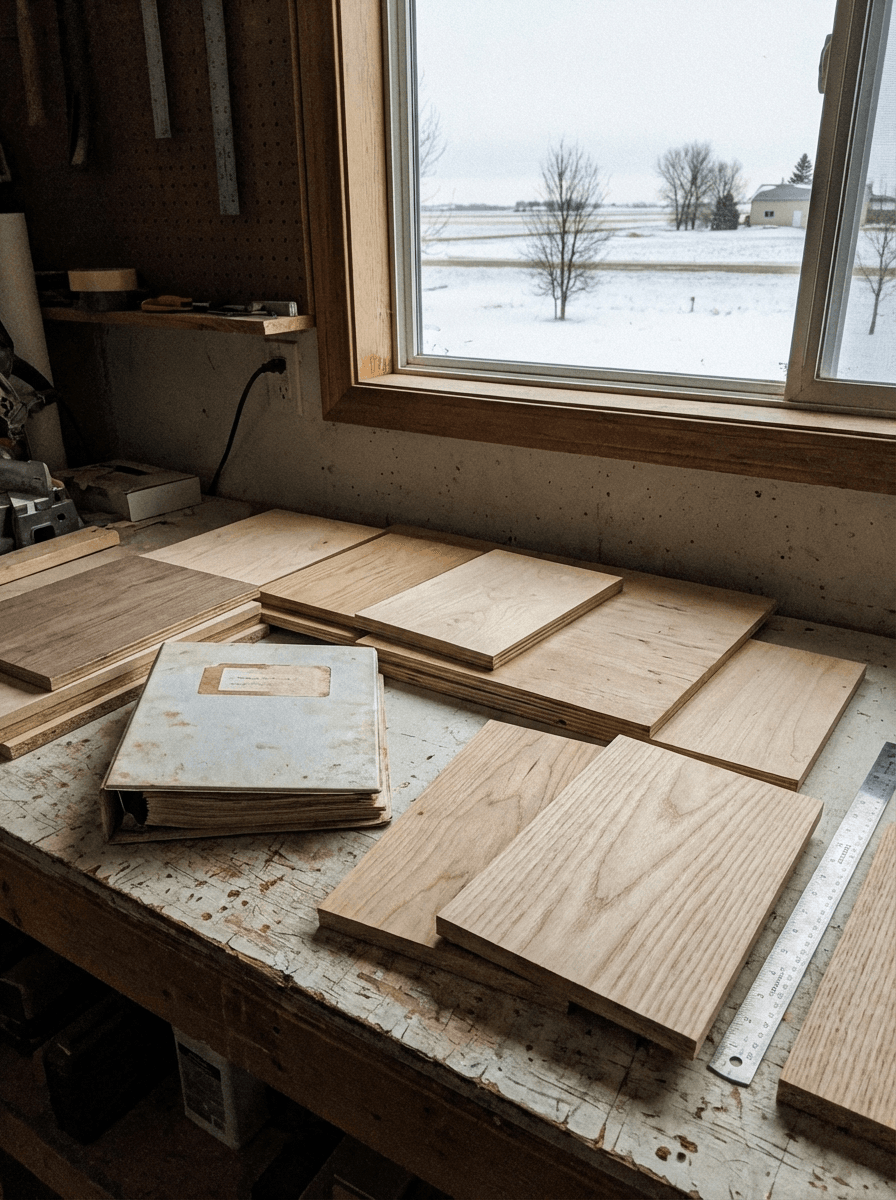
Not all cabinet materials are created equal, and commercial-grade is not the same as residential-grade. The difference comes down to density, thickness, bonding, and how the material performs under daily stress.
Commercial environments put cabinets through more wear than a typical home. Offices, clinics, restaurants, and schools see heavier use, more moisture exposure, and rougher handling. A cabinet that lasts 20 years in a house might only last 5 in a busy medical clinic if it is built with the wrong materials.
When we talk about commercial-grade materials, we mean products that meet industry standards for thickness (typically 3/4-inch for cabinet boxes), structural integrity, moisture resistance, and surface durability. These standards come from organizations like the Architectural Woodwork Manufacturers Association of Canada (AWMAC), which sets grading systems for commercial millwork across the country.
Broadway Millwork builds to AWMAC standards. That means your cabinets are not just functional, they are built to hold up in the real conditions of your workspace.
The grade you choose also affects cost. Premium grades use better veneers, tighter tolerances, and more consistent materials. Economy grades cost less but may show more variation in colour and grain. We help you find the right balance for your budget and your space.
Plywood vs. MDF: Which is Right for You?
This is the question we get asked most often. Plywood and MDF are the two most popular core materials for commercial cabinetry, and each has clear strengths.
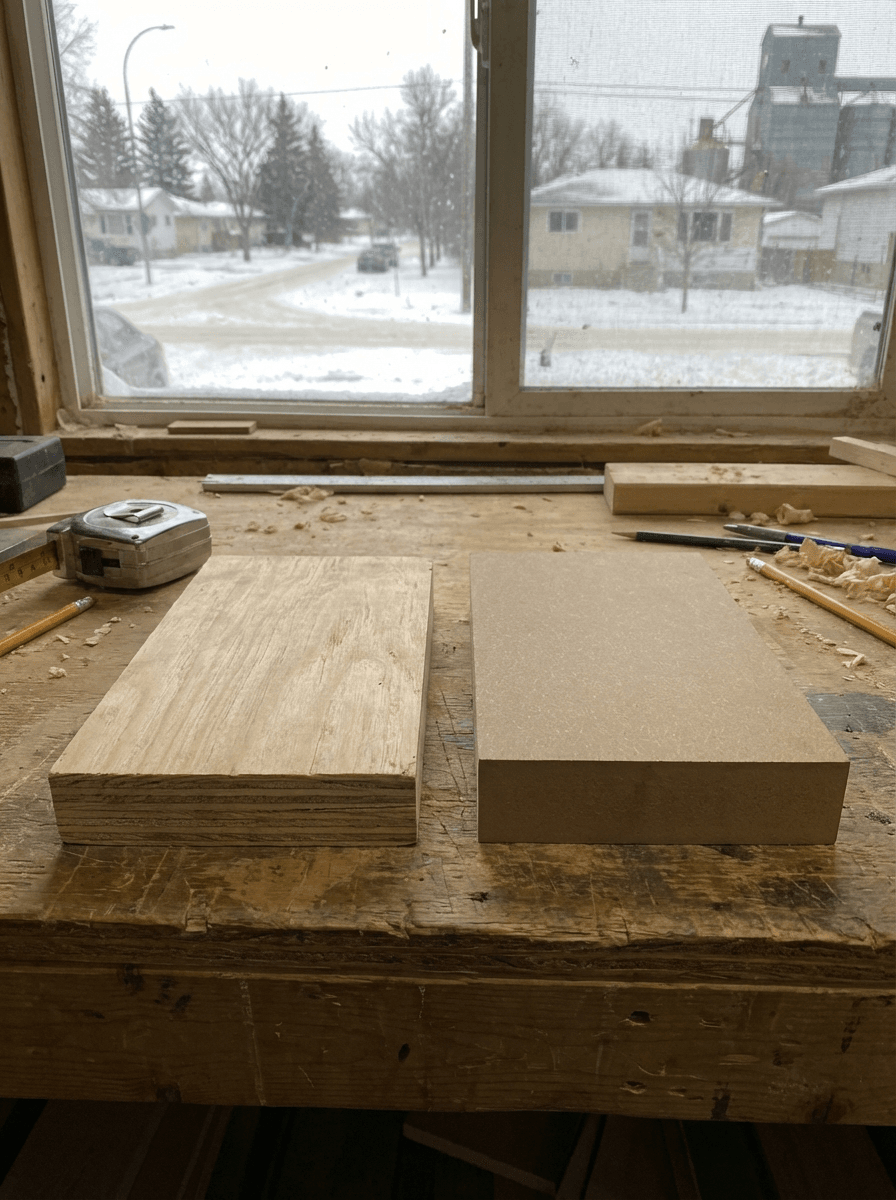
Plywood is made from thin layers of real wood glued together in alternating directions. This cross-grain construction gives it excellent strength and screw-holding ability. It resists warping better than most sheet goods and handles moisture better than MDF.
For commercial applications, we typically use 3/4-inch hardwood plywood for cabinet boxes and shelving. It is lighter than MDF at the same thickness, which matters when you are mounting upper cabinets on walls or building tall storage units.
Where plywood falls short is cost. It is more expensive than MDF, and the edges need banding or finishing because the layers are visible. For projects where budget is tight and moisture is not a major concern, MDF can be the better call.
MDF (Medium-Density Fibreboard) is made from wood fibres bonded with resin and pressed into dense, flat sheets. It is heavier than plywood but produces a smoother surface that paints beautifully. There are no grain patterns or knots, so the finish looks clean and consistent.
MDF is a strong choice for painted cabinet doors, drawer fronts, and any application where a smooth, uniform look matters. It machines well on our CNC equipment, which means precise cuts and tight joints every time.
The downside of MDF is moisture. Standard MDF swells when it absorbs water, and once it swells, it does not go back to its original shape. For wet environments like commercial kitchens or lab spaces, moisture-resistant MDF (often called green board) is available, but plywood is still the safer choice.
Most commercial projects use a combination of both. Plywood for the cabinet boxes and structural components, MDF for the doors and visible faces. That gives you the best of both materials without overspending.
We can walk you through the best combination for your project. Get a free quote to get started.
Melamine and Laminate Options
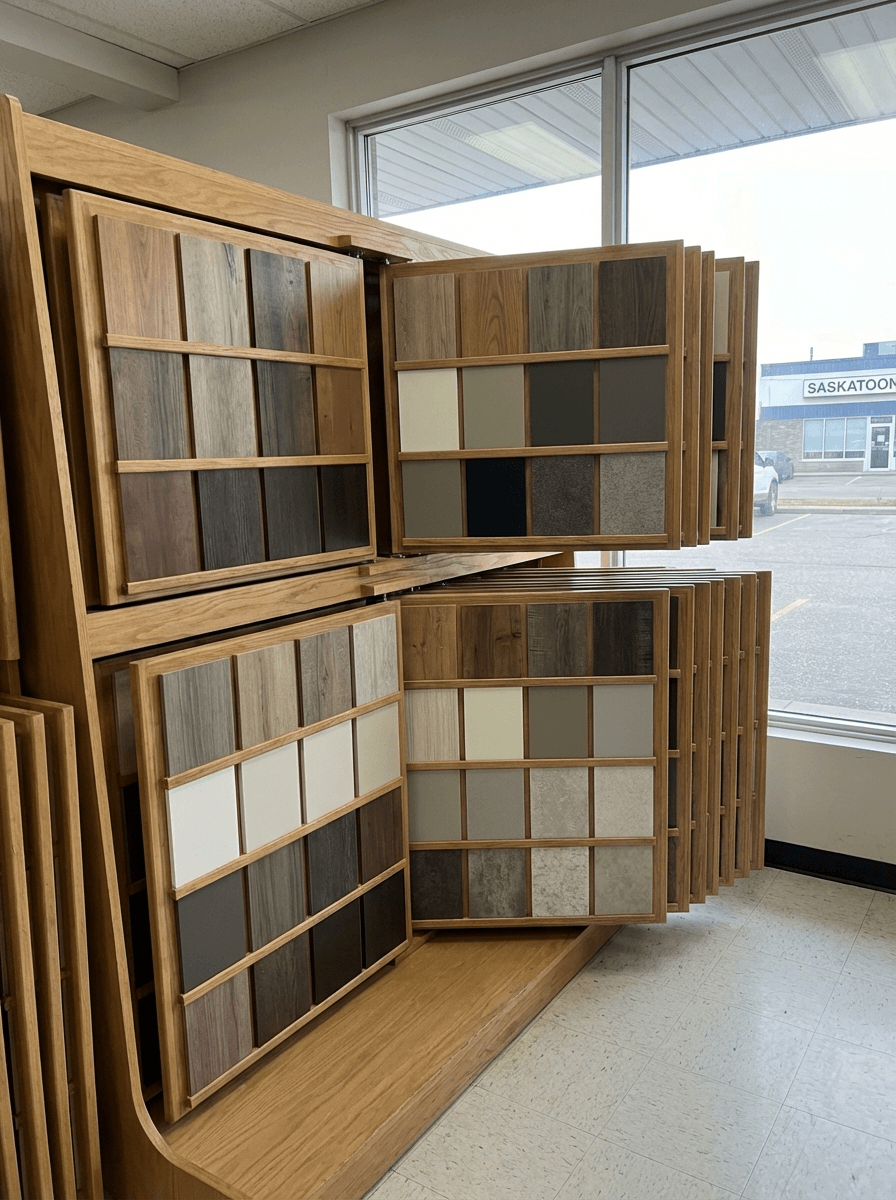
Melamine and laminate are surface materials, not core materials. They get applied over a substrate like particleboard, MDF, or plywood to create a durable, finished surface. You see them everywhere in commercial settings because they are cost-effective, easy to clean, and available in hundreds of colours and patterns.
Melamine is a resin-coated paper that gets thermally fused to a particleboard or MDF core during manufacturing. It comes ready to use with no additional finishing required. The surface resists stains, scratches, and light moisture, making it a practical choice for office cabinets, classroom storage, and breakroom cabinetry.
The limitation with melamine is edge treatment. When you cut a melamine panel, the raw core is exposed and needs edge banding. The bond between the melamine surface and the core can also chip if the panel takes a hard impact. For high-traffic commercial spaces where cabinets take regular bumps, this is worth considering.
High-Pressure Laminate (HPL) is a step up from melamine in durability. It is made from multiple layers of kraft paper saturated with resin, topped with a decorative layer, and bonded under high heat and pressure. The result is a thicker, tougher surface that handles heavier use.
HPL is the go-to surface material for commercial countertops, healthcare cabinetry, and restaurant millwork where surfaces need to stand up to daily cleaning, chemical disinfectants, and heavy wear.
Both melamine and HPL come in a wide range of colours, wood grains, stone patterns, and solid tones. If you want the look of natural wood or stone without the cost, laminate can get you there.
For help choosing the right laminate for your industry, check out our cabinet finishes guide or contact us directly.
Cost vs. Durability Considerations
Every project has a budget. The trick is spending it where it matters most.
The cheapest material is not always the most expensive in the long run. A particleboard cabinet in a busy restaurant kitchen might save money upfront, but when it starts swelling from moisture after two years, you are paying for new cabinets. Plywood would have cost more initially and lasted ten times longer.
These numbers shift depending on the environment. A plywood cabinet in a dry office will last longer than the same cabinet in a hospital where it gets wiped down with chemical cleaners multiple times a day.
We think about durability in terms of three factors: moisture exposure, daily wear, and load requirements. A retail display cabinet that holds lightweight products has different needs than a laboratory casework unit that stores heavy equipment and chemicals.
Broadway Millwork helps you match the right material to your specific situation. We are not going to sell you solid wood cabinets for a space that only needs melamine, and we are not going to put melamine in a space that needs plywood. The goal is getting it right so your cabinets last as long as your business needs them to.
Tell us about your project and we will recommend the best materials for your budget and your space.

Request Material Recommendations
Choosing the right material for commercial cabinets depends on your industry, your environment, and your budget. There is no single answer that works for every project.
Broadway Millwork builds commercial cabinets, custom millwork, and countertops for businesses across Saskatchewan. We have been doing this since 1995, and our team knows which materials work best in which situations.
Here is what happens when you reach out:
- We learn about your project, including the space, the use, and the timeline.
- We recommend materials based on what will perform best in your environment.
- We provide a detailed quote with material specs, so you know exactly what you are getting.
No pressure, no obligation. Just clear answers from people who work with these materials every day.
Call us at (306) 975-2020 or request a free quote online. We serve businesses in Saskatoon, Regina, Prince Albert, and communities across Saskatchewan through our province-wide service area.
Frequently Asked Questions
What is the best material for commercial cabinets?
It depends on the environment. Plywood is the strongest all-around choice for cabinet boxes, especially in spaces with moisture. MDF works well for painted doors and drawer fronts. Melamine over particleboard is a cost-effective option for dry, low-impact spaces like offices. Broadway Millwork recommends the right material based on your specific project.
How long do commercial cabinets last?
With the right materials and proper installation, commercial cabinets typically last 15 to 25 years. Plywood construction in a controlled environment can last even longer. Particleboard cabinets in high-moisture or high-traffic areas may only last 5 to 10 years.
Is plywood better than MDF for commercial cabinets?
Each has its strengths. Plywood is better for structural components, moisture resistance, and screw-holding ability. MDF is better for smooth painted finishes and is more affordable. Most commercial projects use both, with plywood for the cabinet boxes and MDF for the doors.
What is the difference between melamine and laminate?
Melamine is a thin resin coating fused directly to the substrate during manufacturing. High-pressure laminate (HPL) is a thicker, separate sheet bonded to the substrate after manufacturing. HPL is more durable and better suited for high-traffic commercial applications.
Do you offer sustainable or eco-friendly cabinet materials?
Yes. Broadway Millwork offers FSC-certified plywood, low-VOC adhesives, and eco-friendly finishes. Visit our sustainable millwork page for more details on our environmental options.
How do I know which material is right for my project?
Contact Broadway Millwork for a free consultation. We will ask about your space, your usage, your budget, and your timeline, then recommend the materials that make the most sense. Call (306) 975-2020 or request a quote online.