
5 Ways CNC Manufacturing Improves Cabinet Quality
You have probably opened a cabinet door at some point and felt it catch, drag, or hang crooked. Maybe you noticed a gap where two panels meet, or a drawer that sticks every time you pull it. Those problems almost always trace back to one thing: the parts were not cut accurately enough. CNC machining improves cabinet quality by fixing those problems before they start. CNC stands for Computer Numerical Control. A computer guides the cutting tools instead of a person steering them by hand, and the difference shows up in every joint, edge, and panel.
At Broadway Millwork, we run every commercial cabinet project through our CNC shop. We have been building commercial cabinets in Saskatoon since 1995, and adding CNC equipment was the single biggest quality improvement we have made in 30 years. Here is what it does and why it matters for your project.
1. CNC machining delivers tighter tolerances on every cut
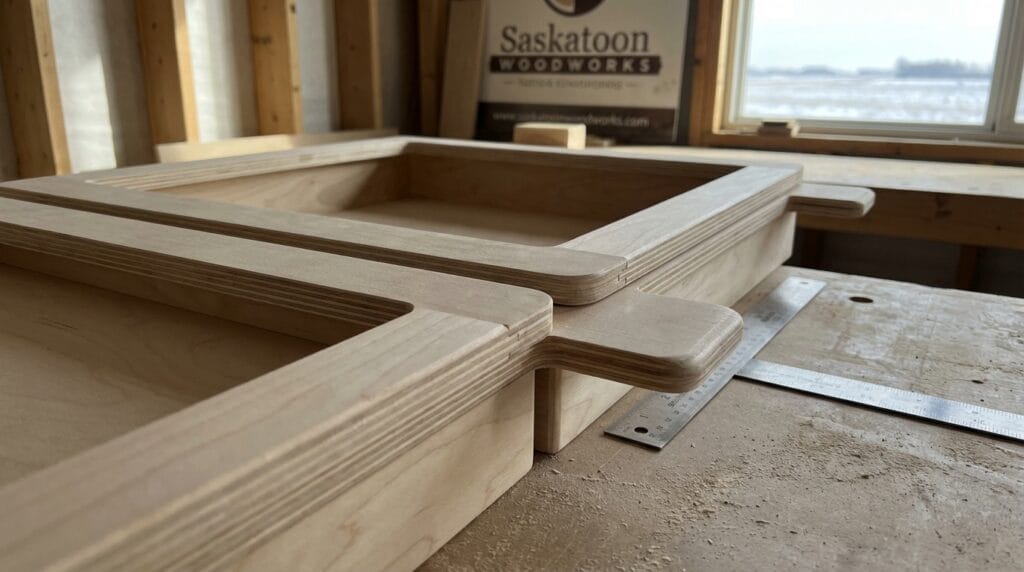
A skilled carpenter cutting panels on a table saw can usually get within a millimetre of the target. That sounds pretty good until you consider that CNC machining holds fractions of a millimetre, and it does it on every single panel without variation. That is where the cabinet quality difference starts.
Why does a fraction of a millimetre matter?
Because commercial cabinets are really just a stack of parts that need to fit together. Shelves sit inside boxes. Doors hang on frames. Drawers slide on tracks. If any one of those parts is slightly off, the whole thing feels wrong. Doors do not close flush. Drawers bind. Shelves rock when you set something on them. None of these are structural failures, but they make a brand new cabinet feel cheap, and your clients will notice.
CNC machining removes that variable. The machine runs the same program every time, so part number 50 comes out the same size as part number 1. For a project like a medical office cabinet installation where you might need 40 identical units down a hallway, that kind of repeatability is not optional.
2. Complex shapes and joints become practical
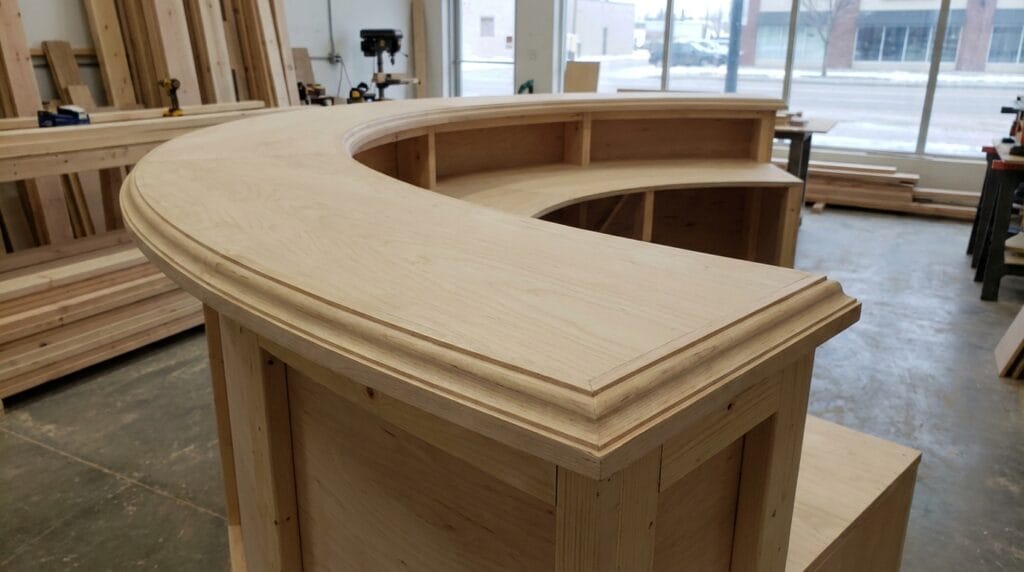
Dado joints. Rabbet cuts. Decorative edge profiles. Curved panels. Custom cutouts for wiring or plumbing. A skilled woodworker can produce all of these by hand, but the time adds up fast and the risk of a mistake goes up with every added detail.
A CNC machine does not care whether the cut is simple or complicated. You program the shape, load the sheet, and the router follows the path. A straight cut and a curved cut take roughly the same effort from the machine’s side, which opens up design options that would be painfully slow or risky to do manually.
Here is where this gets practical. Say you are building a custom reception desk with a curved front panel and routed channels for cable management. By hand, that curved panel alone could take half a day to shape and sand to a smooth profile. On a CNC router, it takes minutes. The design that would have stayed on paper because of cost or risk actually gets built, and the finished piece looks exactly like the rendering.
3. Less wasted material
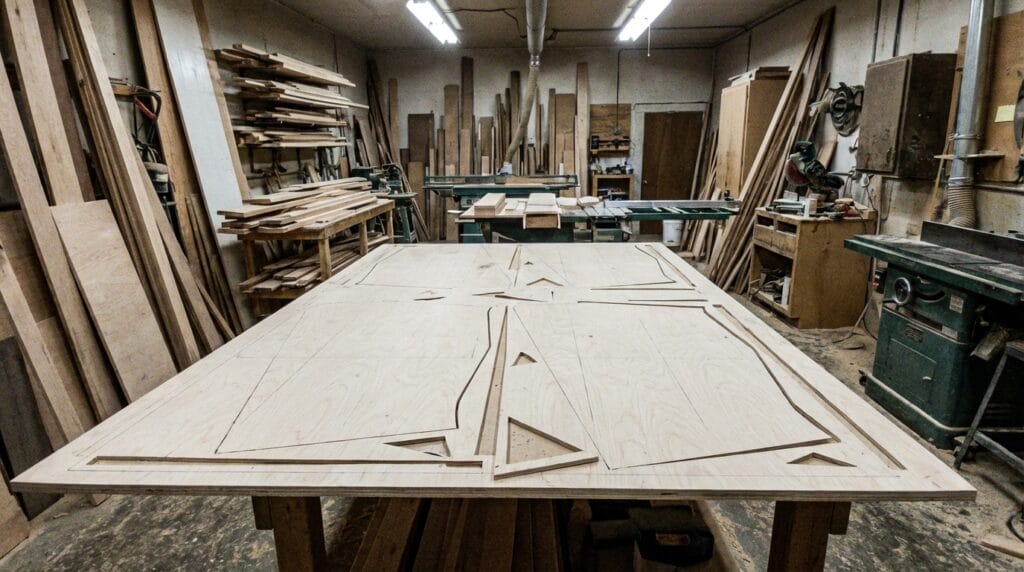
CNC machining also improves cabinet quality by reducing waste. Nesting software arranges all the parts for your project on sheets of plywood or MDF before any cutting starts. The software fits everything as tightly as possible, the way you would pack a suitcase, to get the most parts from each sheet. Less leftover scrap means lower material costs on your project.
Hand cutting works differently. An operator grabs a sheet, cuts the parts they need, and sets aside the offcut. That leftover piece might get used on another project. It might sit against the wall for six months and then get tossed. Over a large job with dozens of sheets, the waste stacks up.
With CNC nesting, material waste drops. That is good for your budget, and it supports sustainable millwork practices by keeping more usable wood out of the landfill. Fewer sheets ordered means fewer trees harvested. It is a small thing on a single project, but it adds up across a year of work.
4. CNC machining means every cabinet in the batch is identical
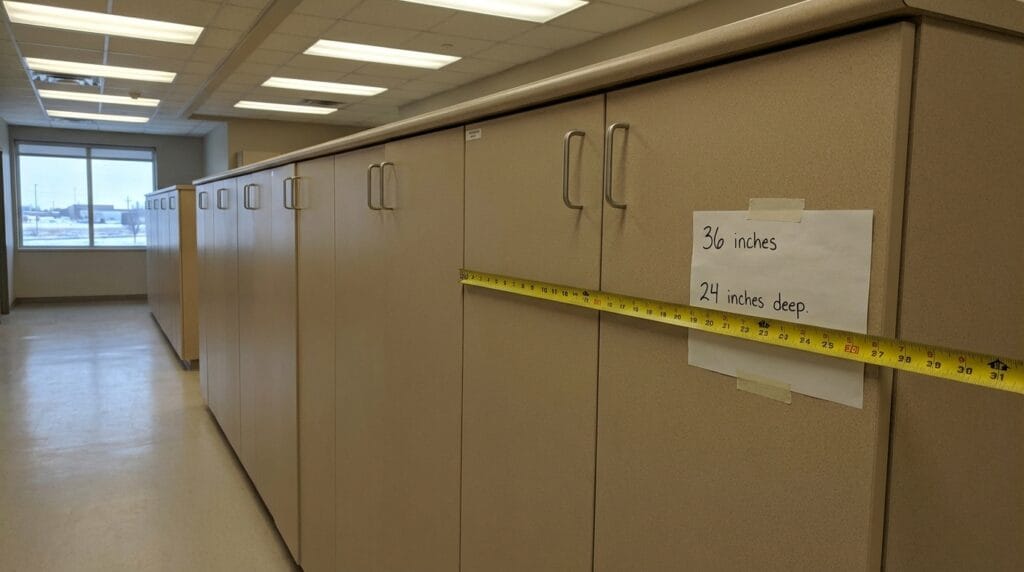
This is the cabinet quality advantage that matters most on commercial jobs.
Think about a school cabinet project where you need 30 identical storage units for classrooms across a building. Or a corporate office where every workstation gets the same overhead unit. Consistency is not a bonus on these projects. It is the entire point.
Hand-built cabinets always carry small variations between units. Usually the differences are minor enough that nobody notices when cabinets are installed in separate rooms. But line 15 of them up along a single wall, and even a 2mm height difference between units creates a visible waviness along the top edge. That waviness looks like a mistake, even if every individual cabinet is well-built.
CNC machining eliminates this cabinet quality problem. The machine cuts every part from the same digital file. First cabinet, last cabinet, same dimensions. The machine does not get tired at 4:30 on a Friday or rush to finish before a long weekend. For retail display cabinets where customers are looking right at the millwork, or restaurant projects where the bar cabinetry is the centrepiece of the room, that consistency protects your investment.
5. Faster production, same quality
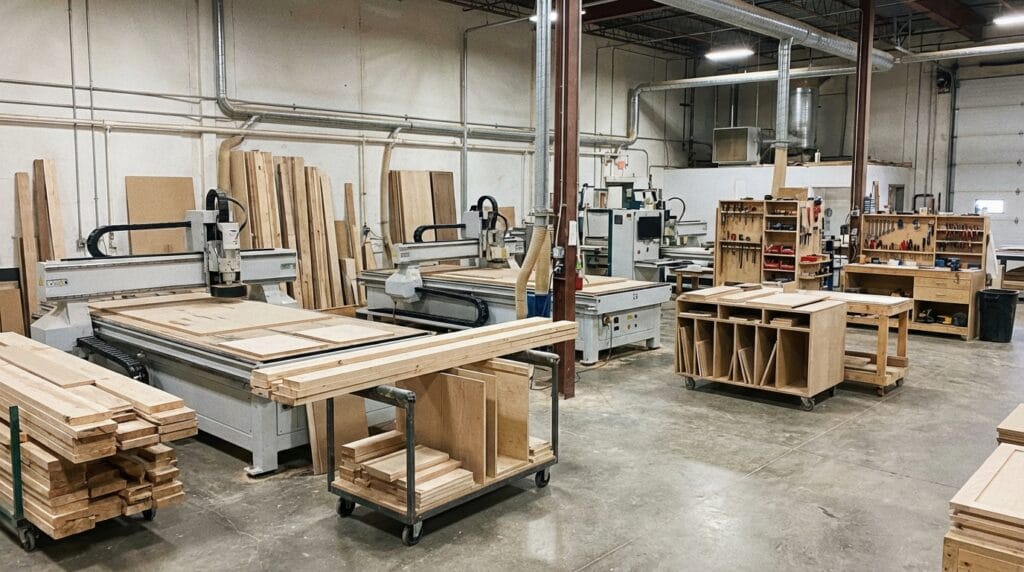
In traditional woodworking, faster usually means sloppier. Rush through hand cuts and you get mistakes. CNC machining flips that relationship without sacrificing cabinet quality. The machine runs at the same speed and the same accuracy whether you need 5 cabinets or 50.
A CNC router cuts, drills, and shapes multiple parts in a single run. While one batch is on the machine, the operator sets up material for the next batch. Your cabinets move through production faster, which shortens the overall project timeline.
There is a downstream benefit too. Faster production means faster cabinet installation. When parts arrive on site and fit together on the first try, installers spend less time trimming, shimming, and adjusting in the field. Fewer days of disruption in your space. Lower labour costs on the install. A finished project that was worth the wait, delivered sooner than you expected.
What CNC does not replace
CNC machining is not the whole picture. A machine can cut parts to extreme precision, but someone still has to design the cabinet, choose the right finishes and countertop materials, assemble everything, and install the finished product on site. The people running the shop still matter as much as the equipment.
What CNC does is give those people better parts to work with. When every shelf, panel, and door arrives at the assembly bench cut to exact spec, the build goes smoother. Joints pull tight. Doors line up on the first hang. The finished cabinet holds up better over the years because nothing was forced into place during assembly.
For a closer look at how CNC fits into our full workflow, see our CNC manufacturing page.
Is CNC the right fit for your project?
CNC machining improves cabinet quality the most on projects with volume, complexity, or both. If you need one small cabinet for a utility closet, it is probably more than you need. But for most commercial work, CNC is the standard, not the upgrade.
A few signs CNC machining will benefit your project:
- You need more than a handful of matching cabinets
- Your design includes curves, custom cutouts, or detailed edge profiles
- The cabinets will be visible to customers, patients, or clients
- You want to keep on-site installation time short
- Your project schedule is tight
Broadway Millwork has been building custom millwork and commercial cabinets across Saskatchewan for over 30 years. Every project runs through our CNC shop, and the difference shows in the finished product.
Frequently asked questions about CNC machining and cabinet quality
What does CNC stand for?
CNC stands for Computer Numerical Control. A computer program guides cutting tools like routers, drills, and saws along a digital design file, cutting each part to exact measurements.
Does CNC manufacturing cost more than hand-built cabinets?
Not usually. CNC machines work faster and waste less material, so the per-unit cost on most commercial projects comes in the same or lower than hand-built alternatives. You also get a more consistent result, which reduces rework and installation problems.
Can CNC machines work with all cabinet materials?
Yes. CNC routers handle plywood, MDF, melamine, solid wood, and most sheet goods used in commercial cabinetry. Different materials call for different cutting speeds and bit types, but the machine works with all of them. Our cabinet materials guide breaks down each option.
How long does CNC production take compared to hand-building?
It depends on the size of the order, but CNC is almost always faster on volume. A batch of 20 identical cabinet boxes that might take a week to cut by hand can often be cut in a day or two on a CNC machine. Assembly and finishing still take the same amount of time either way.
Does Broadway Millwork use CNC on every project?
We use CNC machining on every commercial cabinet project. It is part of our standard production process for commercial cabinets, custom millwork, and commercial countertops. On very small or one-off residential pieces, we sometimes use a combination of CNC and hand work depending on what the project calls for.
Get a quote for your commercial cabinet project
Want to see how CNC machining can improve cabinet quality on your next project? Request a free quote and tell us about your space. You can also call us at 306-975-2020. We will get back to you within one business day.
Request a Quote
Service Areas
We serve businesses across Saskatchewan, from Saskatoon and Regina to smaller regional centres throughout the province. Here are some of the communities where we regularly complete commercial millwork projects:
- Saskatoon
- Regina
- Prince Albert
- Moose Jaw
- Swift Current
- Yorkton
- North Battleford
- Lloydminster
- Estevan
- Weyburn
- Martensville
- Warman
- Humboldt
- Meadow Lake
Don’t see your community on the list? We take on projects across Saskatchewan and into neighbouring provinces, including Alberta and Manitoba. Contact us to discuss your project location and we’ll let you know how we can help.