
How to Plan a Commercial Cabinet Renovation Without Shutting Down
A commercial cabinet renovation is one of those projects that most business owners put off for years. Not because they do not need it, but because they picture weeks of dust, noise, and a closed front door. The good news is that shutting down does not have to be part of the plan. With the right approach, you can replace old cabinets, upgrade your space, and keep your business running the whole time.
We have done this for medical clinics that cannot close exam rooms, restaurants that need their kitchens running through dinner service, and offices where 50 people show up to work every morning. The key is planning. If you break the project into the right steps before anyone picks up a tool, the renovation fits around your schedule instead of the other way around.
Here is how to make it work.
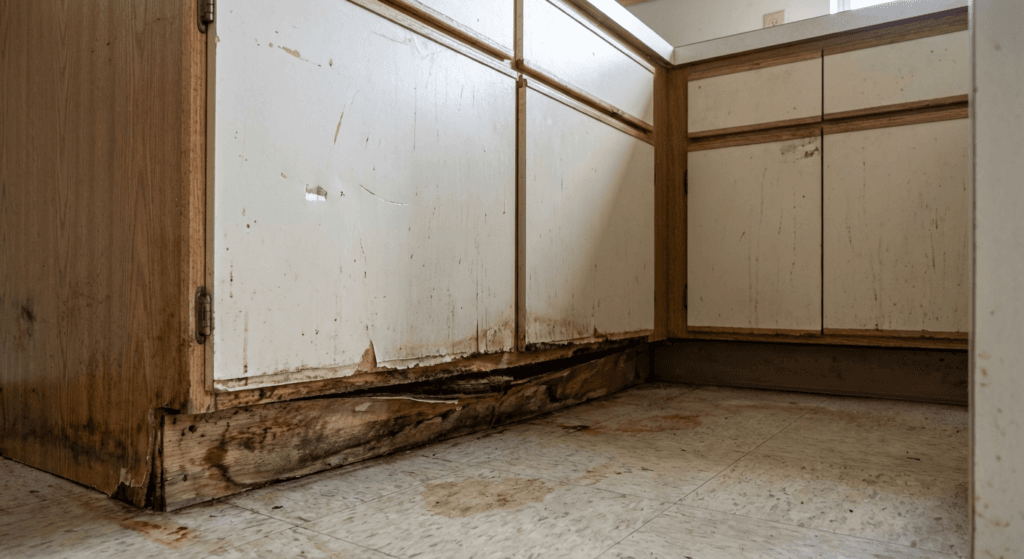
Figure Out What Actually Needs to Change
Before you start picking finishes and getting quotes, walk through your space and take an honest look at what you are dealing with. Not every commercial cabinet renovation needs to be a full tear-out. Sometimes the cabinet boxes are fine and you just need new doors, hardware, and countertops. Other times, the layout itself is the problem and everything needs to go.
Ask yourself a few questions. Are the cabinets physically damaged, or do they just look dated? Is the layout causing bottlenecks for your staff? Are you running out of storage, or is the storage you have just poorly organized? Do any cabinets have water damage, warping, or delamination?
The answers will help you figure out whether you need a partial refresh or a complete replacement. That distinction matters because it changes the timeline, the cost, and how much disruption your day-to-day operations will actually see.
If you are not sure what condition your cabinets are in, a millwork company can do a site visit and give you an honest assessment. At Broadway Millwork, that initial consultation is free, and there is no obligation attached. We would rather tell you what you actually need than sell you something you do not.
Plan a Commercial Cabinet Renovation in Phases
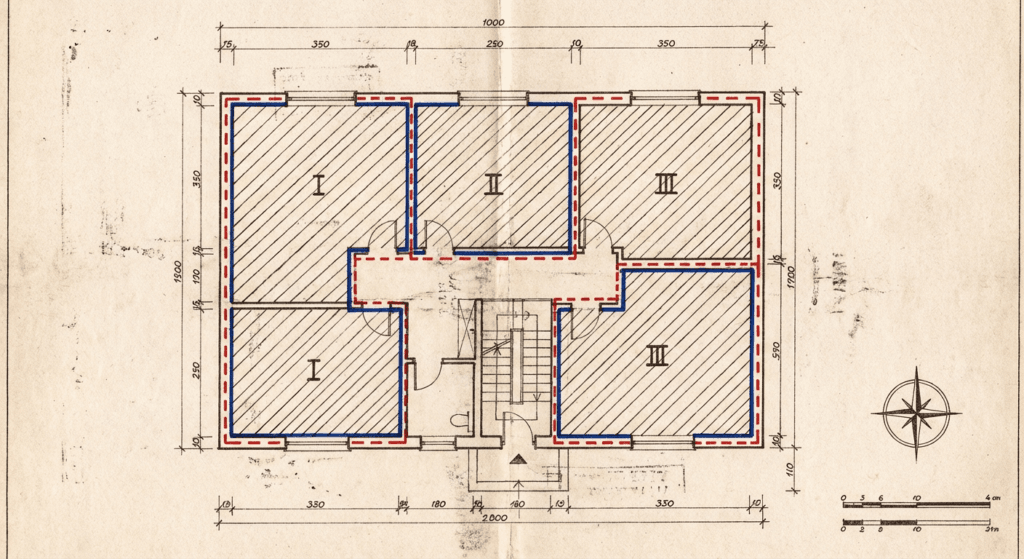
This is where most of the “staying open” magic happens. Instead of gutting your entire space at once, you break the renovation into zones or phases. Each phase covers one area of your business while the rest keeps operating normally.
For example, a dental clinic with six operatories might renovate two at a time. The other four stay open for patients. A restaurant might start with the front-of-house cabinetry during slower weekday mornings, then tackle the kitchen storage on evenings and weekends.
Here is how phased planning usually works:
Zone mapping. Walk through your space and group cabinets into logical zones. Think about which areas can be closed off without shutting down your whole operation. Corner offices, back storage rooms, and break areas are usually the easiest to start with.
Priority ranking. Decide which zones need attention first. If you have cabinets with water damage or safety issues, those come first. Cosmetic upgrades can wait for a later phase.
Schedule alignment. Match each phase to your business calendar. Avoid your busiest weeks. If you are a retailer, do not start a phase the week before a holiday sale. If you are a school, summer break is the obvious window for the biggest work.
A good millwork team will help you map all of this out during the design phase. They have done it before and know what works.
Choose Materials That Speed Up the Process
The materials you pick affect more than looks and budget. They also affect how long the renovation takes. Some materials need more on-site work than others, and that matters when you are trying to keep disruption short.
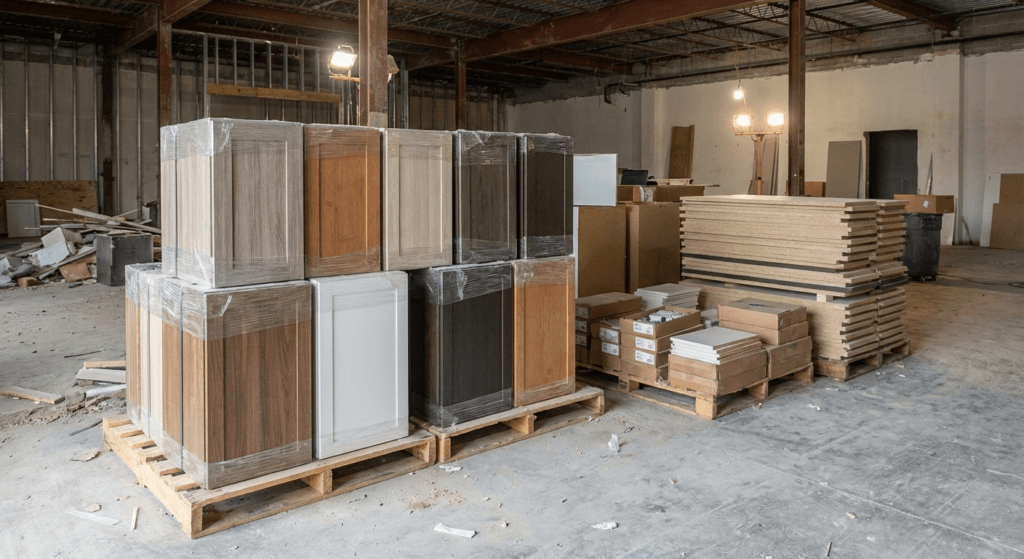
Pre-finished cabinets are your friend here. When cabinets arrive at your location already sanded, sealed, and finished, there is no painting or staining happening on site. That means less dust, fewer fumes, and faster installation. At Broadway, we do all finishing work in our CNC manufacturing facility in Saskatoon before anything gets loaded on a truck.
Laminate and melamine finishes are another good choice for commercial cabinet renovation projects where speed matters. They do not need a cure time like paint does, and they are ready to use the moment they are installed. They also wipe clean easily, which is helpful if your space sees a lot of traffic. Our cabinet finishes guide covers the trade-offs between paint, stain, and laminate in detail.
For countertops, laminate and solid surface options tend to install faster than stone because they are lighter and easier to cut on site. If you are renovating a restaurant or medical clinic, these materials also meet the durability and sanitation standards your industry requires.

Work Around Your Business Hours
This sounds obvious, but you would be surprised how many contractors just assume they will work nine to five on weekdays. For most businesses, that is the worst possible schedule because it overlaps with your busiest hours.
When planning a commercial cabinet renovation, talk to your contractor about off-hours work. Early mornings before you open, evenings after you close, and weekends are all options. Yes, some contractors charge a premium for off-hours, but compare that cost against the revenue you would lose by closing for a week. The math usually favours staying open.
For quieter phases of the project, like templating, measuring, and minor hardware swaps, daytime work might be fine. Save the loud stuff (demolition, drilling, cutting) for times when your space is empty or your customers are not around.
A few scheduling tips that help:
Set clear start and stop times for each work session. Your staff needs to know when the crew will be there and when they will not. Agree on cleanup standards before work begins. The contractor should leave each zone clean enough to use the next day. Build buffer days into the schedule. Renovations almost always take a little longer than planned, and buffer days keep a small delay from snowballing into a big problem.
Communicate With Your Team and Your Customers
A renovation is disruptive even when it goes well. The difference between a smooth project and a stressful one often comes down to communication.
Tell your staff what is happening before it starts. Share the phase schedule, point out which areas will be off-limits and when, and give them a contact person if something comes up during the work. If your renovation affects common areas like break rooms or washrooms, set up temporary alternatives ahead of time.
For your customers, a brief heads-up goes a long way. A sign at the entrance that says “We’re upgrading our space, excuse our dust” is enough. Most people appreciate knowing that a business is investing in its space. If the work is happening in customer-facing areas, let them know when each section will be finished.
If you run a clinic, dental office, or other appointment-based business, consider calling or emailing patients whose appointments fall during active renovation phases. Give them the option to reschedule if noise is a concern. That small step prevents a lot of complaints.
What to Expect During Installation
Even with good planning, there are a few things that come up during almost every commercial cabinet renovation. Knowing about them ahead of time makes them easier to deal with.
Old cabinets might reveal surprises. When we pull out old cabinetry, we sometimes find water damage, mould, or electrical work that was not up to code. Fixing these issues adds time and cost, but ignoring them is not an option. A reputable contractor will flag these right away and give you options.
There will be some noise. Even with off-hours scheduling, drilling and fastening produce noise. If your business has noise-sensitive areas (recording studios, therapy rooms, exam rooms), plan those zones for times when the building is completely empty.
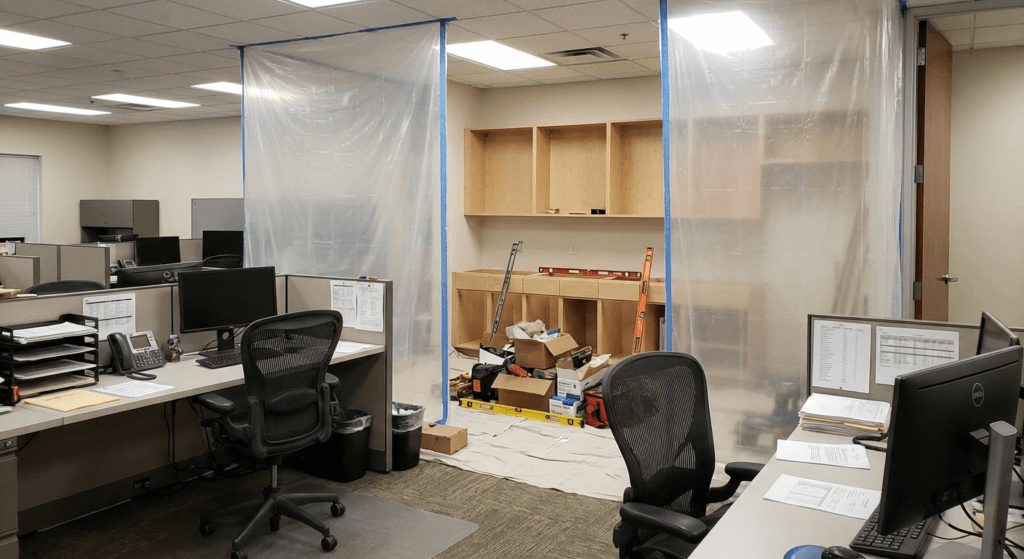
Dust is manageable but not invisible. Professional installers use dust barriers, plastic sheeting, and portable extraction fans to contain debris. Still, some fine dust will escape. Daily cleanup between work sessions keeps it under control.
The first phase takes the longest. The crew is learning the building, figuring out access points, and working out logistics. By phase two or three, everything moves faster because the routine is established.
Our project process page walks through the full journey from consultation to final walkthrough, so you know what each step looks like.
How Long Does a Commercial Cabinet Renovation Take?
That depends on the size of the project and how many phases you split it into. Here are some rough timelines based on projects we have completed across Saskatchewan:
A single office or exam room with new cabinets and countertops typically takes 2 to 4 days of on-site work once the cabinets are built. A full break room or reception area renovation runs about 1 to 2 weeks. A restaurant front-of-house renovation might take 2 to 3 weeks if done in phases around service hours. A full-floor office renovation with 15 to 20 workstations usually takes 4 to 8 weeks when phased.
Keep in mind that the manufacturing time happens before any of this. Custom millwork is built in the shop while your business keeps running. The on-site portion is just the installation, which is the shortest part of the whole process.
For a more detailed look at project timelines, read our article on the commercial millwork timeline and process.
Budgeting for a Renovation You Can Afford
Commercial cabinet renovation costs vary quite a bit depending on materials, scope, and complexity. A few things to keep in mind when you are building your budget:
Phasing can help with cash flow. Instead of paying for the entire project up front, phased renovations let you spread the cost over months. Some businesses renovate one zone per quarter, which is easier on the budget than doing everything at once.
Materials drive a big part of the cost. Plywood cabinet boxes with laminate doors cost less than solid wood with custom stain finishes. Both can look great in a commercial setting, but they sit at different price points. Know your options before you commit.
Do not forget the hidden costs. Permit fees, electrical or plumbing modifications, temporary storage for displaced furniture, and disposal of old cabinets all add up. A detailed quote from your millwork company should include these or flag them clearly.
Compare total cost, not just the sticker price. Cheaper cabinets that need replacing in five years cost more over time than commercial-grade cabinets that last fifteen. Our guide to choosing commercial cabinet materials breaks down the long-term value of different options.
When Full Closure Makes More Sense
We have spent this whole article talking about how to avoid shutting down. But sometimes, a short closure is the better call.
If your space is small (under 500 square feet of cabinetry), phasing might add more cost and complexity than it saves. In those cases, a planned one-week closure with a focused installation crew can be faster and cheaper than stretching the work over a month of evenings and weekends.
Seasonal businesses have natural slow periods that work well for this. A ski lodge can renovate in summer. A tax office can renovate in July. If you have a natural downtime, use it.
The point is not that phasing is always better. The point is that you have options, and the right approach depends on your specific situation.

Get Your Commercial Cabinet Renovation Started
The best time to start planning is months before you want the work done. Lead times for commercial cabinets include design, material selection, manufacturing, and scheduling, and that process works best when it is not rushed.
If you are thinking about upgrading your cabinets and want to keep your business open through the process, give us a call. We will walk through your space, talk about phasing options, and put together a plan that fits your schedule and your budget.
Broadway Millwork has been building and installing commercial cabinetry across Saskatchewan for 30 years. We work with offices, clinics, restaurants, retail stores, and schools, and we know how to get the job done without shutting you down.
Request a free quote or call us at (306) 975-2020.
Frequently Asked Questions
Can I really renovate my commercial cabinets without closing my business?
Yes. Most commercial cabinet renovation projects can be done in phases. We work on one section of your space at a time while the rest stays open. We also schedule installation work around your business hours, including evenings and weekends when needed.
How far in advance should I start planning a cabinet renovation?
Start the conversation at least 2 to 3 months before you want work to begin. That gives enough time for design, material selection, manufacturing, and scheduling. Larger projects with multiple phases may need 4 to 6 months of lead time.
Will my insurance cover any of the renovation costs?
That depends on why you are renovating. If the work is needed because of water damage, fire, or another covered event, your policy may cover part of the cost. For planned upgrades, insurance typically does not apply. Check with your provider before you start.
Do I need a permit for a commercial cabinet renovation?
Cabinet replacement on its own usually does not require a permit. However, if the renovation involves electrical, plumbing, or structural changes, you will likely need permits from your local municipality. Your millwork company or general contractor can help you figure out what applies to your project.
What is the biggest mistake businesses make during a cabinet renovation?
Not planning the phasing properly. When businesses try to do everything at once to “get it over with,” they end up with more disruption, not less. Breaking the project into zones with clear timelines keeps your operation running and actually leads to a better result.
Request a Quote
Service Areas
We serve businesses across Saskatchewan, from Saskatoon and Regina to smaller regional centres throughout the province. Here are some of the communities where we regularly complete commercial millwork projects:
- Saskatoon
- Regina
- Prince Albert
- Moose Jaw
- Swift Current
- Yorkton
- North Battleford
- Lloydminster
- Estevan
- Weyburn
- Martensville
- Warman
- Humboldt
- Meadow Lake
Don’t see your community on the list? We take on projects across Saskatchewan and into neighbouring provinces, including Alberta and Manitoba. Contact us to discuss your project location and we’ll let you know how we can help.