
How to Maintain Commercial Cabinets
Commercial cabinets take a beating.
In a busy medical clinic, a restaurant kitchen, or a retail store, they get touched hundreds of times a day. Cleaners wipe them down with harsh products. Staff lean against them. Doors swing open and shut until the hinges start to complain. Learning how to maintain commercial cabinets is not complicated, but the question most businesses do not ask until it is too late is how fast the damage adds up.
Knowing how to maintain commercial cabinets properly can stretch their lifespan to 20 years or more. Neglect them, and you could be looking at a replacement job in under a decade. This guide breaks down exactly what each material needs, why it matters, and what to avoid.
Why Maintenance Matters More in Commercial Spaces
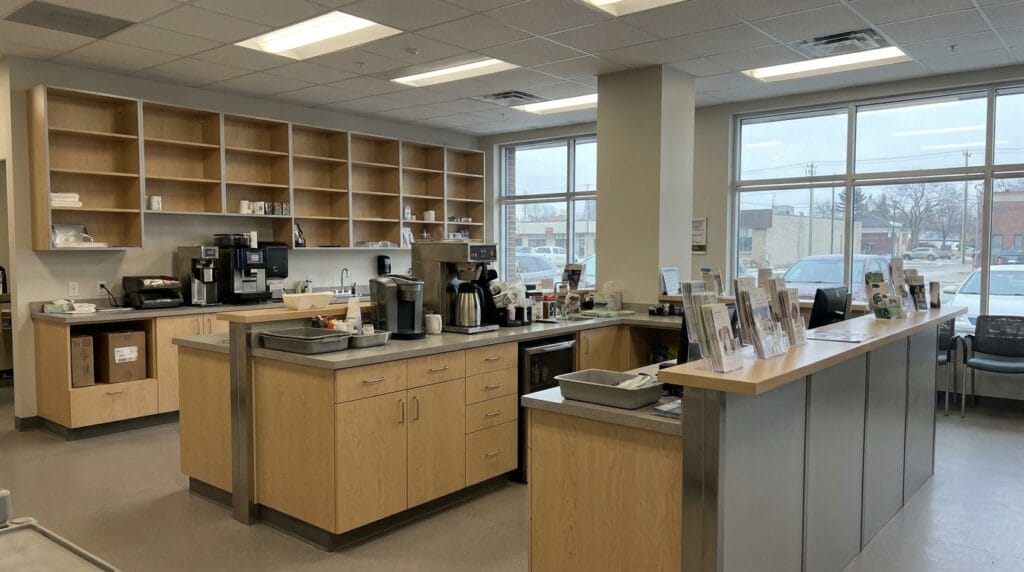
Residential cabinets live a quiet life. Commercial ones do not.
A homeowner opens a cabinet maybe 10 to 15 times a day. A staff member in a busy healthcare clinic might open the same storage cabinet 60 or 70 times per shift. Add in spills, cleaning chemicals, humidity swings between a kitchen and dining room, and the constant traffic of staff and customers, and you have a completely different set of demands on the materials and hardware.
This is why maintaining commercial cabinets has to be deliberate. A quick wipe-down at the end of the day is not enough on its own. Understanding what your cabinets are made of, and what those materials can and cannot handle, makes a real difference in how long they last and how good they look five years from now.
Laminate and Melamine Cabinets
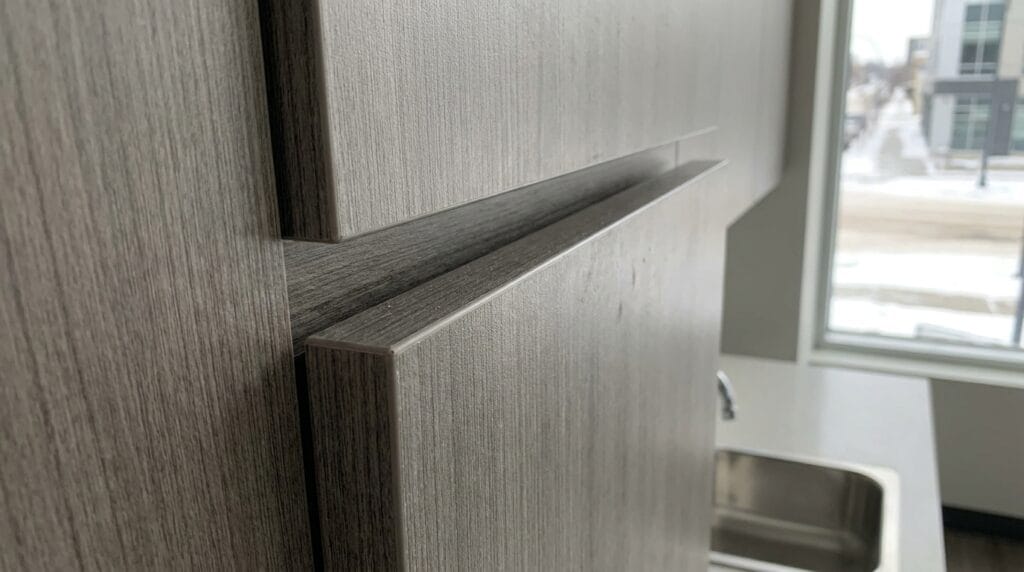
Laminate and melamine are the most common materials in commercial millwork. They are durable, cost-effective, and available in hundreds of finishes. Most commercial cabinets in offices, retail stores, and schools are built with one or both of these, which makes knowing how to care for them worth the time.
The good news is they are easy to clean. A soft cloth with warm water and a mild soap handles most daily messes. For tougher grease or grime, a non-abrasive all-purpose cleaner works well.
What to avoid is where most people go wrong. Do not use steel wool, scrubbing pads, or powdered cleansers on laminate. These scratch the surface and break down the protective layer, which leads to chipping, peeling, and moisture getting in underneath. Bleach-based cleaners are also too harsh for regular use. They strip the finish and cause the colour to fade unevenly over time.
Moisture is the real enemy of melamine. Melamine is a resin coating over a substrate, typically MDF or particleboard. Once water gets into the substrate through a chip or a damaged edge, the board swells and the cabinet starts to fail from the inside out. Keep edges sealed, address chips quickly with edge banding or filler, and never let standing water sit near base cabinets.
For day-to-day care, here is what works:
- Wipe spills right away, especially near joints and edges
- Use a pH-neutral cleaner for routine cleaning
- Dry surfaces after cleaning rather than letting them air dry wet
- Inspect edges quarterly and seal any damage before it spreads
Plywood Cabinet Boxes
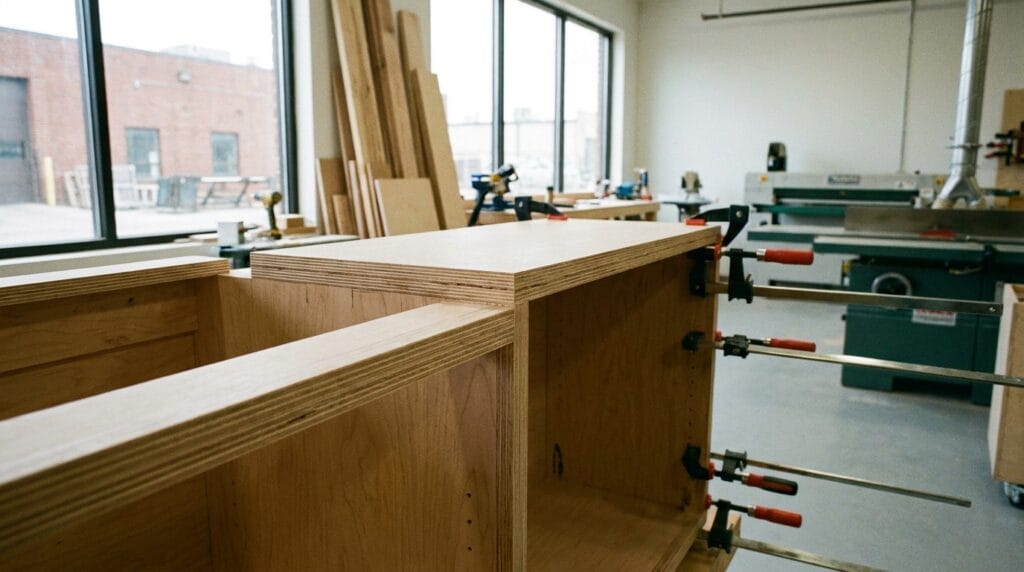
High-quality commercial cabinets are often built with plywood boxes, even when the exterior finish is laminate or veneer. Plywood handles moisture better than particleboard and holds screws more reliably over years of heavy use. This is one reason it is preferred in healthcare and restaurant applications where cabinets have to perform for decades.
Plywood does not require much special care on its own. The finish on top is what needs attention.
If your plywood cabinets have a painted finish, treat them like painted surfaces. If they have a veneer, treat them like wood. The care instructions for each are covered below.
The one thing plywood hates as much as any other wood product is sustained moisture. In commercial kitchens especially, steam and condensation from cooking equipment can slowly work into unfinished or exposed plywood edges. Make sure all edges are sealed, and check the area under and behind sinks regularly for any early signs of water damage.
Painted Wood and Painted MDF Cabinets
Painted cabinets look clean and sharp, which is why they are popular in medical offices, corporate reception areas, and retail spaces. When it comes to how to maintain commercial cabinets with a painted finish, the finish type matters a lot. Paint shows wear more than almost any other surface. Scuffs, chips, and yellowing from the wrong cleaning products are all common complaints.
Choose the right cleaner. That is the single most important thing you can do for painted cabinets. Mild dish soap diluted in water is your best bet. Wring out your cloth well so it is damp rather than wet, and wipe in the direction of the wood grain where visible. Paint surfaces respond better to gentle repeated passes than to one hard scrub.
Cleaning products with ammonia or bleach will yellow white-painted cabinets faster than almost anything else. If you are using a commercial-grade disinfectant in a healthcare or food service setting, check the label for ammonia content before using it on painted surfaces. Many facilities keep a dedicated cabinet cleaner on hand and use a separate, stronger product only for high-touch hardware areas.
Keep a small jar of touch-up paint on site. Chips and nicks happen. Catching them quickly stops moisture from getting into the substrate and keeps everything looking looked-after rather than beat up.
Stained Wood Cabinets
Stained wood adds warmth that painted finishes cannot quite replicate. It is common in corporate boardrooms, executive offices, and upscale hospitality settings.
It also requires the most consistent care of any cabinet material.
Wood breathes. It expands in humidity and contracts in dry air. In a commercial space with HVAC running year-round, this movement is mostly minor and manageable. But in spaces with dramatic humidity swings, like a restaurant with an open kitchen, it can cause joints to loosen or wood to warp if the cabinets are not looked after properly.
For cleaning, use a product made specifically for wood cabinets. Avoid water-based cleaners applied too heavily. Excess moisture raises the grain of the wood, dulls the finish, and creates tiny cracks where bacteria can collect. In a healthcare or food service setting, that is a sanitation concern on top of an aesthetic one.
Apply a wood-safe cabinet conditioner or furniture polish every few months. This keeps the finish from drying out and cracking, especially on doors and drawer fronts that get handled constantly. In low-humidity environments like offices with heavy air conditioning, do this more often than you think you need to.
Watch for these warning signs:
- Finish looking dull or flat where it was once shiny
- Small white rings or marks from moisture contact
- Visible grain raising, where the wood surface feels rough to the touch
- Joints or seams starting to separate
Catching these early saves real money. A surface can be re-conditioned or spot-refinished relatively quickly. Waiting until the damage is widespread often means a full strip and refinish job, which takes cabinets out of service for days.
Solid Surface and Thermofoil Finishes
Thermofoil is a vinyl film applied over MDF. It is popular in commercial settings because there are no seams to trap dirt, it wipes down easily, and it comes in a wide range of colours and textures. Solid surface materials like Corian appear more often on countertops but occasionally show up as cabinet components in healthcare or lab settings.
Both clean easily with a soft cloth and mild soap.
The risk with thermofoil is heat. A toaster oven, a heat lamp in a restaurant pass-through, or any equipment that runs warm nearby can cause the vinyl to bubble and peel away from the substrate. Once that starts, it does not reverse. Keep heat-producing equipment away from thermofoil surfaces, or use heat shields where the layout makes that difficult.
Solid surface is more forgiving than most people expect. Minor scratches can be buffed out with a Scotch-Brite pad, which is one reason it is valued in high-use environments like labs and healthcare facilities. Deeper scratches can be sanded and resurfaced by a professional without replacing the whole panel.
Hardware: The Part People Forget
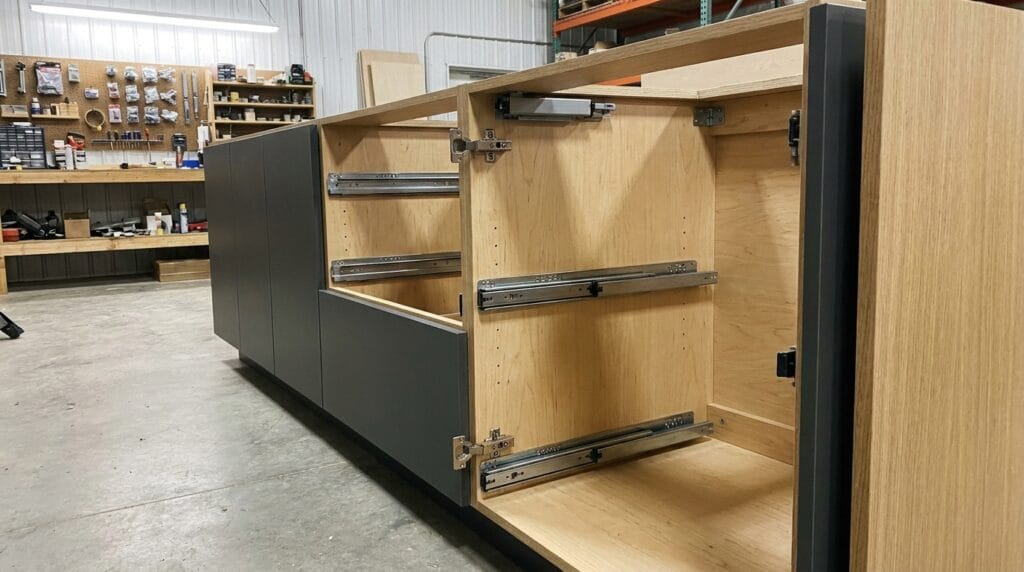
In most commercial settings, the hardware fails before the cabinet does.
Hinges, drawer slides, and pulls are mechanical parts. They wear, they loosen, and they eventually fail if they are not checked occasionally. Check hinges every six months. A loose hinge causes the door to hang crooked, which puts stress on the surrounding hardware and eventually strips the screw holes entirely. Tighten loose screws before they become stripped ones. If a hole is already stripped, insert a wooden toothpick with wood glue and re-drive the screw once it dries.
Drawer slides on heavy commercial drawers benefit from occasional lubrication. A small amount of dry lubricant on the track extends their life considerably. Skip the oil-based lubricants, which attract dust and eventually gum up the mechanism.
Clean hardware with the same mild soap and water you use on the cabinet surface. Dry chrome or brushed metal pulls immediately after to prevent water spots. Brass hardware responds well to a dedicated brass cleaner applied every few months. Hardware is often the first thing to go, so keeping it in good shape is a straightforward part of maintaining commercial cabinets long-term.
Cleaning Products to Avoid on Any Cabinet Material
A few products cause damage across every cabinet type. It is worth posting this list somewhere your cleaning staff will actually see it:
- Undiluted bleach or bleach-heavy disinfectants
- Abrasive scrubbing pads or steel wool
- Powdered cleansers like Comet or Ajax
- Acetone or nail polish remover
- Ammonia-based cleaners on painted or wood surfaces
- Steam cleaners directed at cabinet surfaces or joints
Many commercial cleaning crews use strong degreasers or multi-surface disinfectants that work fine on floors, countertops, and fixtures but are too aggressive for cabinet finishes. Keep a clearly labelled cabinet-safe cleaner available so staff reach for the right product automatically rather than grabbing whatever is closest.
A Seasonal Maintenance Checklist
Most commercial cabinet damage is gradual. You rarely notice it day to day until something cracks, swells, or stops closing right.
A quarterly walk-through is one of the best ways to maintain commercial cabinets before small issues become expensive ones. It takes about 20 minutes. Here is what to check:
Every three months:
- Check all door hinges for looseness or misalignment
- Inspect edges and joints for chips, peeling, or moisture damage
- Test drawer slides for smooth operation
- Check under sinks and near any water source
- Wipe down the inside of cabinets, not just the outside
Once a year:
- Apply conditioner or polish to stained wood cabinets
- Check caulking around sink cutouts or wall junctions
- Lubricate drawer slides
- Touch up paint chips or edge damage
- Confirm the cleaning products in use are cabinet-safe
When to Call for Professional Help
Some problems are past the point of routine maintenance. At that stage, knowing how to maintain commercial cabinets is less useful than knowing when to call someone in.
Cabinet boxes that have swelled from sustained moisture damage usually cannot be fully restored. The substrate loses its structural integrity and the doors will never hang right again. At that point, replacement is more cost-effective than repeated repairs.
Finish problems are a different story. Widespread peeling laminate, large areas of delaminated thermofoil, or heavily scratched painted surfaces may qualify for a professional resurfacing rather than full replacement. Resurfacing typically runs 40 to 60 percent of the cost of new cabinets and can add many more years to a structurally sound box.
If you are not sure whether your cabinets need repair or replacement, an on-site assessment from a commercial millwork company takes about 30 minutes and gives you a clear answer. At Broadway Millwork, we do this regularly for clients across Saskatchewan who want to understand their options before committing to a budget.
Make Your Investment Last
Commercial cabinets are a real investment. The installation cost, the downtime during a renovation, the disruption to your staff and customers. It all adds up. A basic maintenance routine protects that investment without adding much to your day-to-day operations.
The businesses we see replacing cabinets too soon are almost always dealing with one of two things: the wrong cleaning products used consistently over time, or moisture damage that was left too long. Both are preventable.
If you have questions about how to maintain commercial cabinets made from the specific materials in your space, or if you are planning a new cabinet project and want to know which materials hold up best for your industry, we are happy to talk. Contact Broadway Millwork for a free consultation and we will walk you through your options.
Request a Quote
Service Areas
We serve businesses across Saskatchewan, from Saskatoon and Regina to smaller regional centres throughout the province. Here are some of the communities where we regularly complete commercial millwork projects:
- Saskatoon
- Regina
- Prince Albert
- Moose Jaw
- Swift Current
- Yorkton
- North Battleford
- Lloydminster
- Estevan
- Weyburn
- Martensville
- Warman
- Humboldt
- Meadow Lake
Don’t see your community on the list? We take on projects across Saskatchewan and into neighbouring provinces, including Alberta and Manitoba. Contact us to discuss your project location and we’ll let you know how we can help.